In addition to the Saints whose Feast Days we celebrate, there are several other notable saints with an affiliation to the Order.
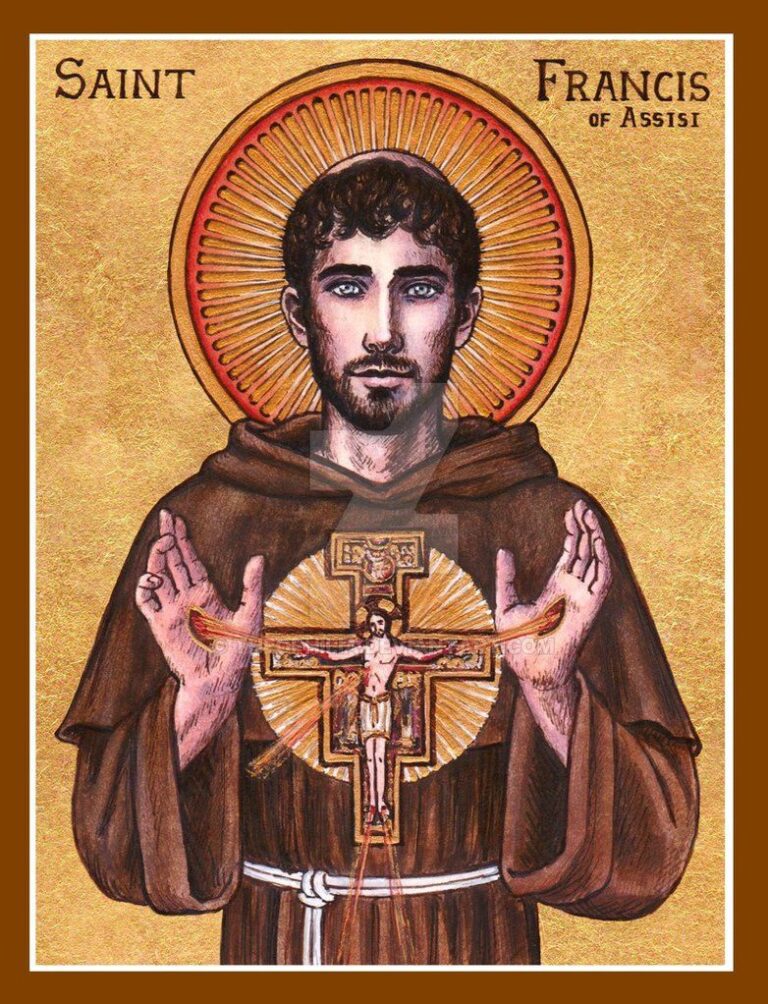
O Lord, make me an instrument of your peace,
Where there is hatred, let me sow love
Where there is injury, pardon.
Where there is doubt, faith,
Where there is darkness, light,
And where there is sadness, joy;
O divine Master, grant that I may not so much seek
to be consoled as to console,
to be understood as to understand
to be loved as to love,
for it is in giving that we receive,
it is in pardoning that we are pardoned,
it is in dying that we are born to eternal life.
-- Prayer of St. Francis
In the early 13th century, amidst the fervor of the Fifth Crusade, a humble friar named Francis of Assisi set sail for the Holy Land, a region sacred to Christians, Muslims, and Jews, at that time torn by conflict. Born in 1181 or 1182 in the Italian town of Assisi, Francis had already renounced wealth and embraced a life of poverty, seeking to follow Christ with radical devotion. His journey to the Holy Land in 1219 was not one of conquest but of peace, driven by a heart that saw all people as brothers and sisters under God’s creation.
Francis’ journey laid the foundation for a lasting Franciscan presence in the Holy Land. As early as 1217, during a gathering of his growing band of followers, he sent friars to the region, establishing the Province of the Holy Land. By 1342, under Pope Clement VI, this mission was formalized as the Custody of the Holy Land, entrusting the Franciscans with the care of Christianity’s most sacred sites. From the Basilica of the Holy Sepulchre in Jerusalem, where Christ’s tomb is venerated, to the Church of the Nativity in Bethlehem, the Franciscans became guardians of these holy places. Their role was not without struggle. Over centuries, they navigated political upheavals, from Ottoman rule beginning in 1517 to tensions with other religious communities. Yet, through diplomacy and perseverance, they secured rights to key shrines, such as in 1333 when agreements with Muslim rulers allowed them access to sacred spaces, a responsibility later codified in the Status Quo agreement of 1757.
Today, from their headquarters at Saint Saviour’s Monastery in Jerusalem, the Custody of the Holy Land continues its ancient mission. The Franciscans maintain sacred sites, ensuring pilgrims can pray where Jesus once walked. They educate children, support the vulnerable, and advocate for peace amidst the region’s ongoing conflicts.
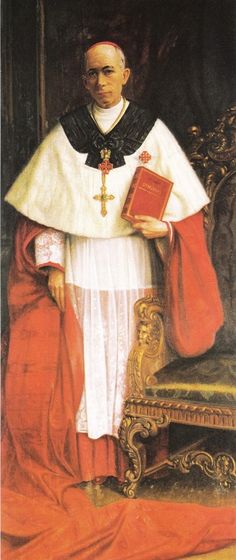
Grand Officer of the Order. Born in Rome, he entered the Benedictine monastery of St Paul-Outside-the-Walls when he was 11, taking the name of Ildefonso, and was ordained a priest in 1904. He served his own community in various offices until he was elected abbot in 1918. He taught at several pontifical institutes, served as consultor to the Sacred Congregation of Rites, and held other high offices. Pope Pius XI appointed him Archbishop of Milan in 1929, consecrated him and created him a Cardinal. Bl. Afredo gave priority to catechesis and promoted the role of the laity in the parish and in Catholic Action. He denounced Fascism and its racist ideology. He championed the cause of the poor during World War II, founded the Institute of Ambrosian Chant and Sacred Music and the Ambrosianeum and Didascaleion cultural centres. Above all, he proposed holiness as a goal for all, and the only means to human happiness. In 1954 he withdrew to Venegono Seminary, where he died with an exhortation to holiness on his lips. His last, moving words were to the seminarians:
“You want something to remember me by. All I can leave you is an invitation to holiness…”
He was beatified on 12 May 1996.
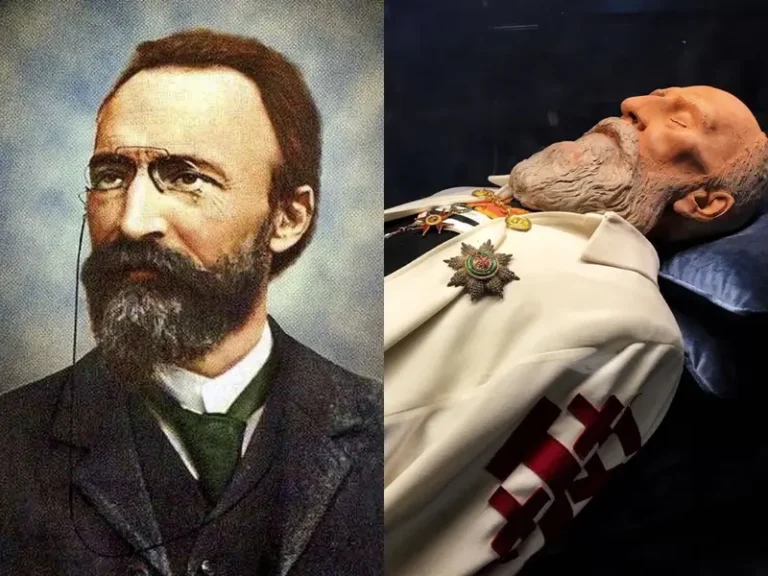
Bartolo Longo was born in Latiano, Italy, in 1841 and studied law at the University of Naples. He strayed from the faith for a short period and returned to it thanks to the efforts of a learned Dominican, Friar Alberto Radente. The friar gave him a thorough instruction in theology and professed him into the Third Order of St. Dominic giving him the name of Fratel Rosario, Brother Rosary. The young lawyer, a former satanic priest, was destined to become one of the greatest modern apostles of the rosary.
In 1872 Bartolo went to the valley of Pompeii to establish legal title to properties inherited by the countess Marianna De Fusco after the death of her husband. In 1885 the two were married. The valley visited by the lawyer was a desolate wasteland inhabited by a few scattered peasants and infested by wild animals and brigands. The moral and spiritual abandonment of the poor peasants so touched his heart that he fell to his knees and vowed to Our Lady that he would sacrifice his life for their salvation.
“If it be true that you promised St. Dominic that whoever spreads the Rosary will be saved, I will be saved, because I will not leave Pompeii until I have spread your Rosary.”
His subsequent life was the fulfillment of that vow and a demonstration of the miraculous power of the holy rosary.
With the cooperation of influential friends in Naples, he undertook the evangelization of the valley, going from house to house distributing medals, holy pictures, scapulars, catechisms and instructing the poor peasants in the knowledge and power of the rosary. Urged on by the local bishop, he constructed a small rosary chapel which today has become the great basilica of Our Lady of the Rosary of Pompeii.
Our Lady assisted powerfully in the construction of the shrine by granting graces and favors to benefactors of the enterprise. By 1885 some 940 cures were recorded and described in Blessed Bartolo’s history of the shrine. This holy layman won great acclaim as the Father of Orphans. He provided thousands of abandoned orphan children with a loving home in a complex of buildings at the shrine known as the City of Charity. He died in Pompeii, October 5, 1926.
At the request of Pope Pius XI, Bartolo Longo was invested with the insignia of Knight Grand Cross of the Equestrian Order of the Holy Sepulchre of Jerusalem, in the Holy Year of 1925, by Patriarch Barlassina, of the Latin Patriarchate of Jerusalem. He is here shown wearing the Cape of the Order. He was beatified by Pope John Paul II on October 26, 1980. On 19 October 2025, he was Canonized by Pope Leo XIV. His feast day is observed on October 6.